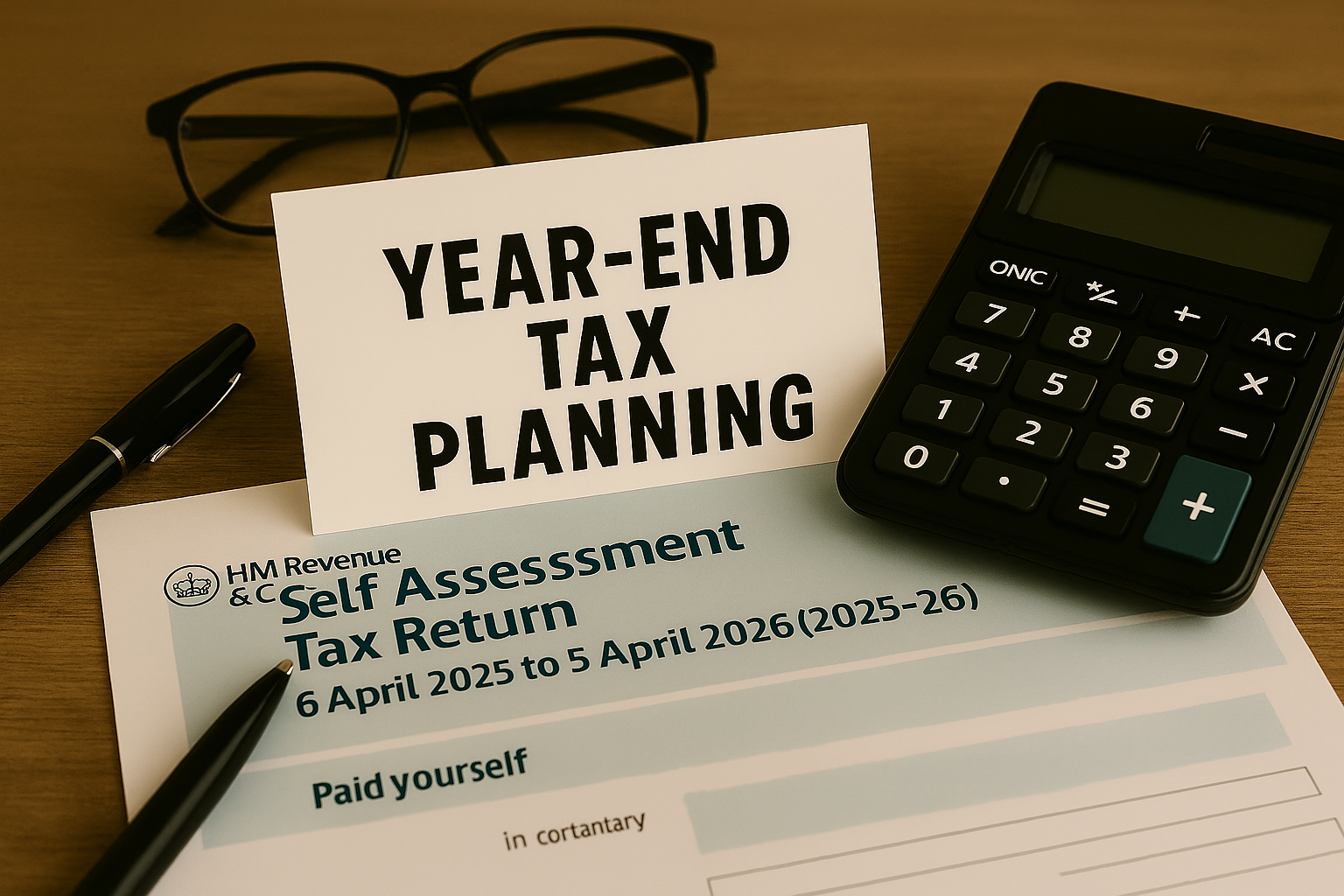
Tax year end planning - potential actions by 5th April 2026
Dividend tax rates increase by 2% from 6th April 2026, therefore consider declaring a dividend this tax year, even if you do not intend to draw the cash until a later date.
However, be mindful of the loss of child benefit entitlement for earnings between £60k and £80k and loss of personal allowance once income hits £100k.
Use your ISA allowance of £20,000 to generate tax free interest — it cannot be carried forward, so any unused allowance is lost after 5th April.
A reminder the cash ISA allowance for under 65s is reducing to £12,000 from 6th April 2027.
Each individual has a £60,000 annual pension allowance, and unused allowances from the previous three years can be carried forward (e.g., unused 2022/23 allowance expires on 5th April 2026).
Personal pension contributions can reduce earnings to assist with retaining the personal allowance and tax-free childcare entitlement if your income is over £100k.
MTD will apply to sole traders and landlords with income (not profit) over £50k from 6th April 2026.
The income threshold reduces to £30k from April 2027, so review record‑keeping and reporting requirements now.
Consider the timing of bonuses, invoices and capital expenditure for businesses with a financial year end of 31st March or 5th April to ensure tax relief is accelerated.
Consider whether you can utilise your £3,000 CGT annual exemption or crystallise a loss to offset gains you have in this tax year.
The CGT rate for gains qualifying for Business Asset Disposal Relief increases from 14% to 18% from 6th April, therefore ensure transactions have completed before this date.
From 6th April 2026, 100% IHT relief for business and agricultural property will be capped at £2.5 million per individual – consider whether your IHT position needs reviewing.